 01 · MAKE
Build an idea.
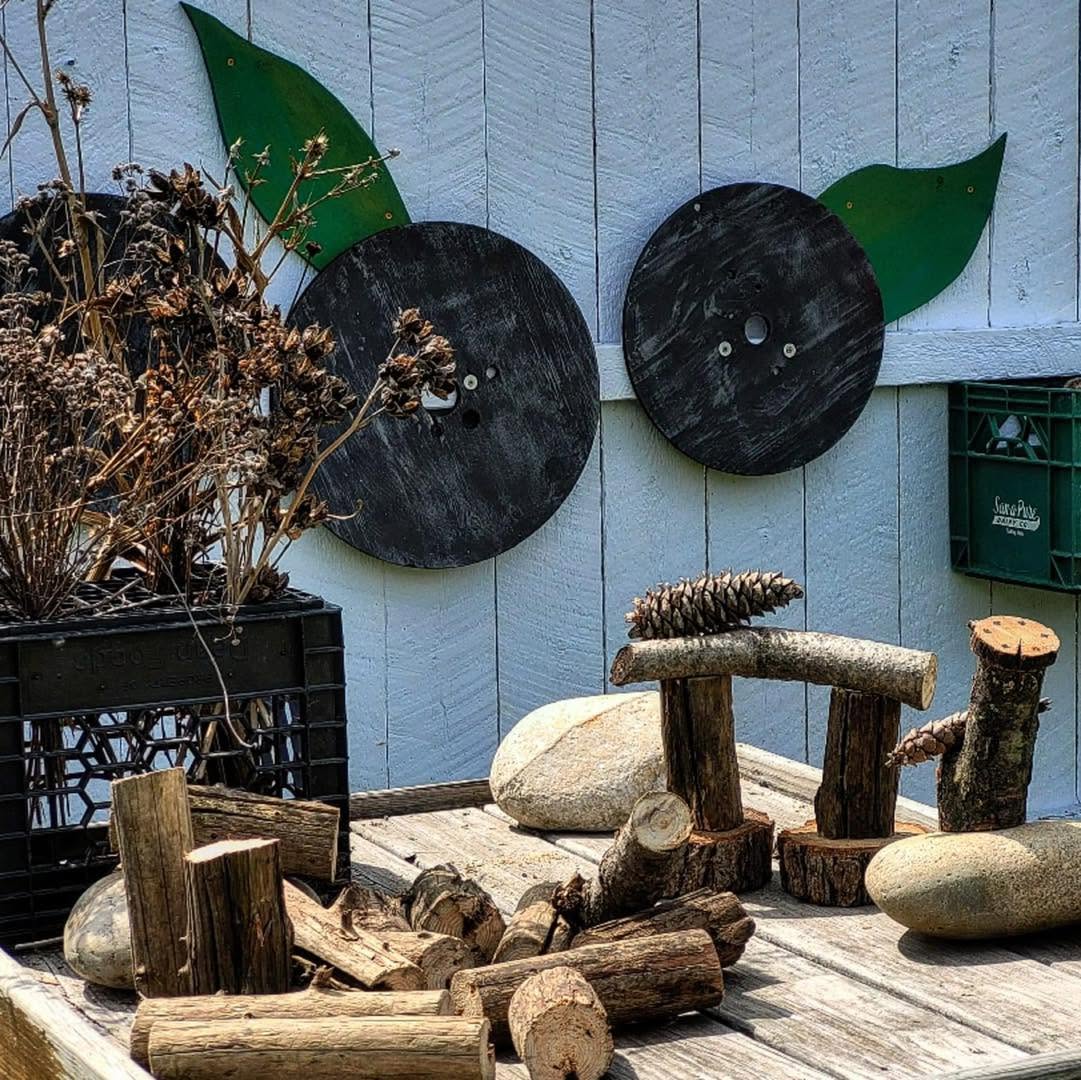
Tree slices, sticks, stones, and other natural materials invite children to arrange, test, change, and try again.

Green Garden · Outdoor Classrooms
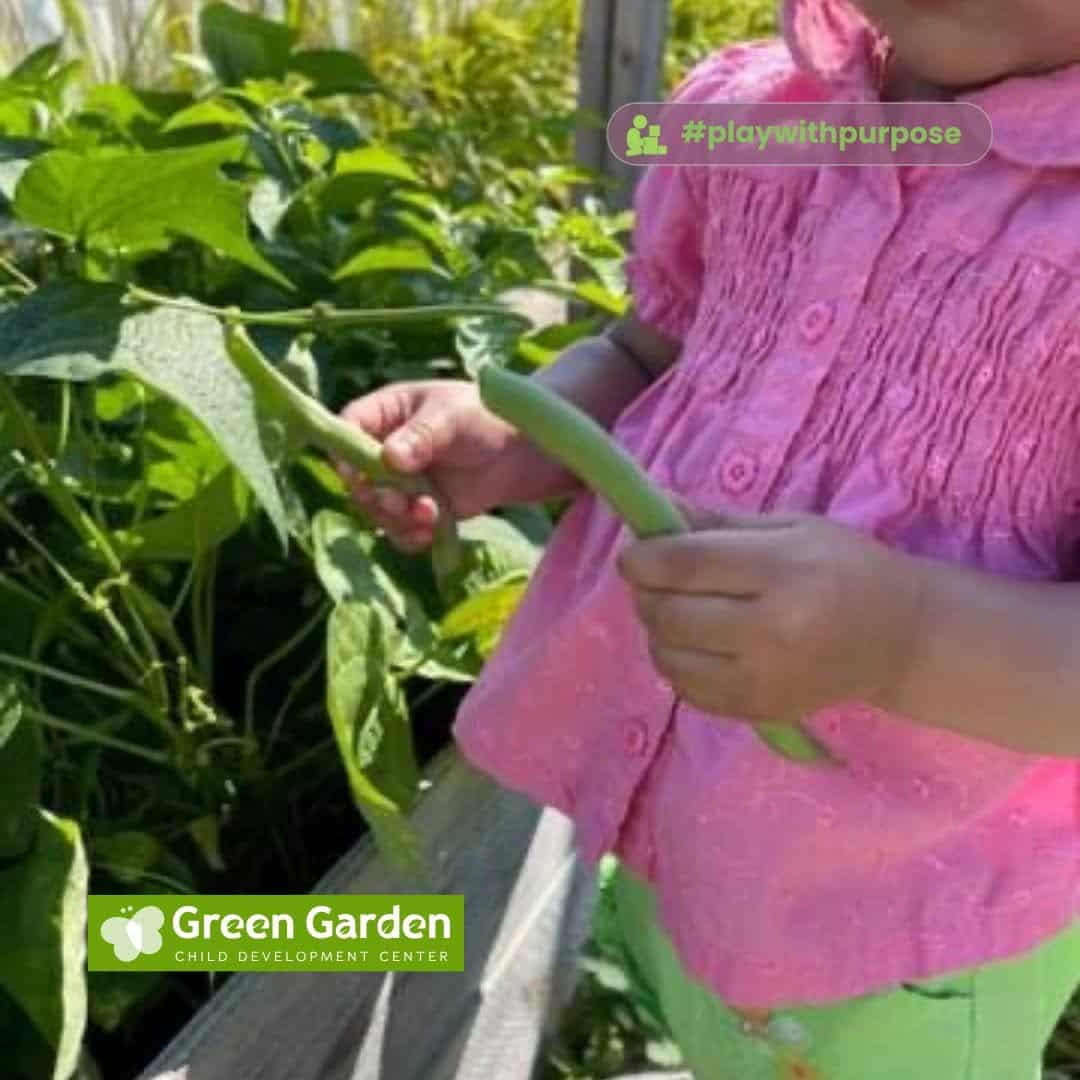
A log becomes a bridge. A bean becomes a question. A rainy morning changes the whole landscape.
Our natural playgrounds are living classrooms where children have time to move, build, notice, and return to an idea. Teachers are there to listen, offer materials, and help curiosity take its next step.
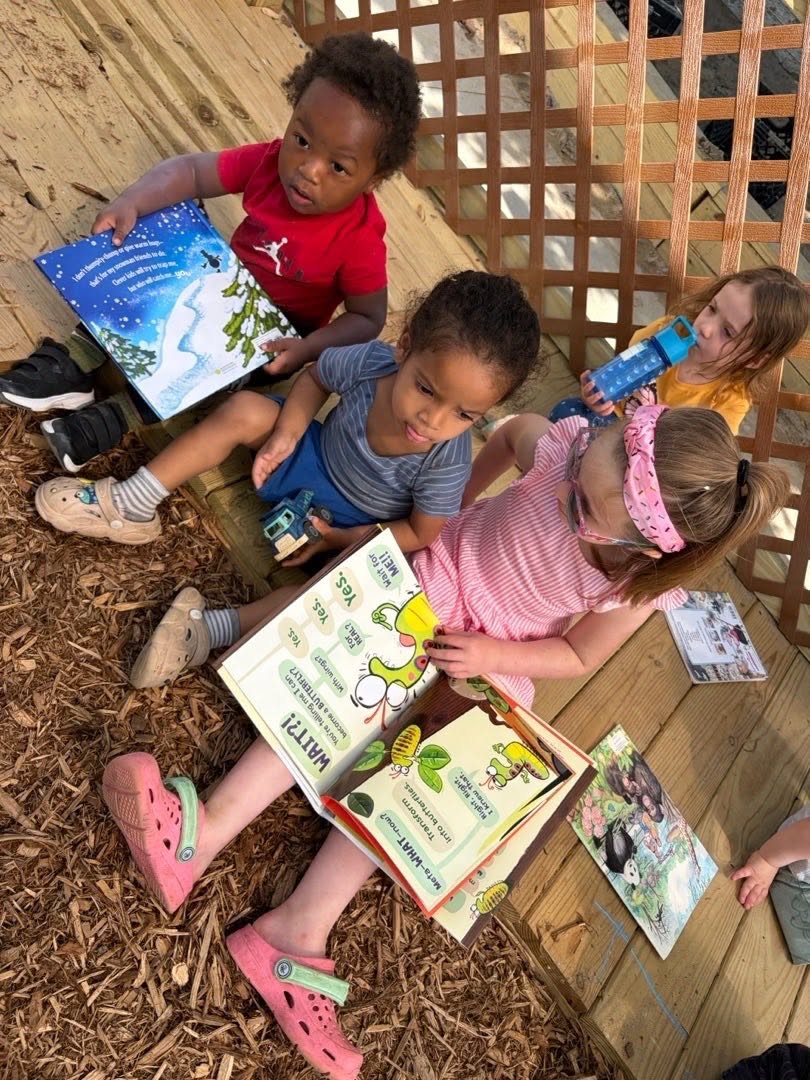
Outside is an extension of the classroom, with all the wonder of a changing world.
Notice · Try · ReturnA day in the outdoor classroom
No two days look quite alike. The season, the materials, and the children’s ideas all shape what happens next.
01 · MAKETree slices, sticks, stones, and other natural materials invite children to arrange, test, change, and try again.
 02 · MOVE
Stepping, climbing, and balancing help children learn what their bodies can do, with teachers close enough to support.
 03 · INVESTIGATE
Water, soil, and a little mud give children something real to compare, combine, and wonder about.
The teacher’s part
When a child pauses at a new challenge, a teacher can observe first, then offer a steady hand or a useful question. “How might you make that more stable?” can open a new line of thinking.
Healthy risk taking is part of learning. Children get to test their balance and judgment in spaces thoughtfully supported by adults who know them.
How relationships support learning →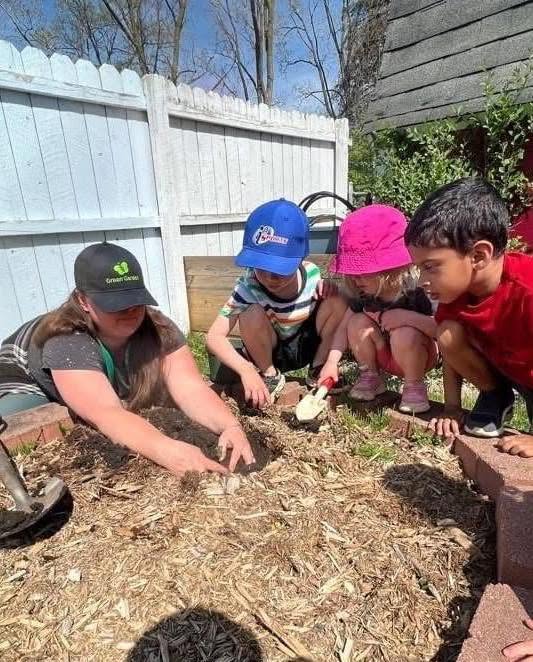
Materials with possibility
Loose parts do not tell a child exactly what to make. Logs may become a bridge, wood slices a pattern, and a fallen branch the start of a long conversation.
Our outdoor spaces make room for mud kitchens, garden tools, found natural materials, and projects that can be revisited. Children can leave a question open and come back to see what changed.
The world keeps changing
Come back tomorrow. The garden will have a new story to tell.
Rain, snow, sun, growth, and the turn of the seasons make discovery possible again and again.

Care for living things
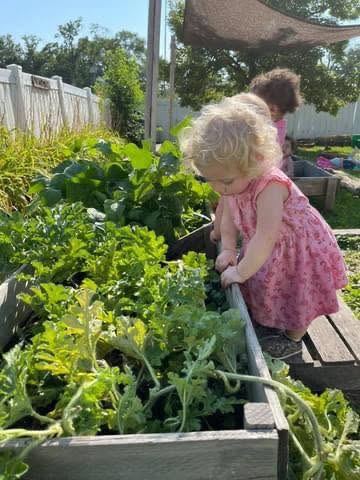
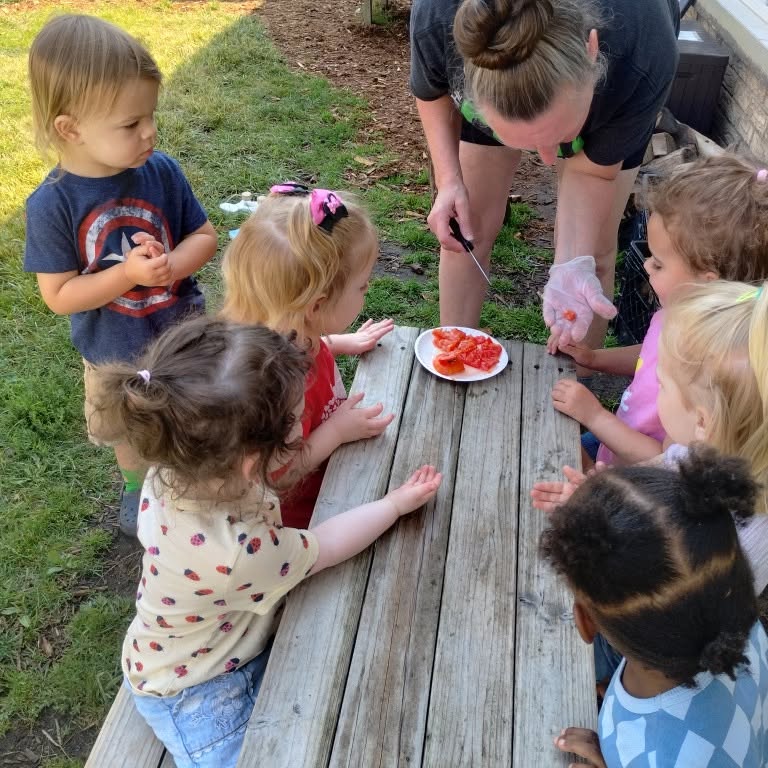
In our gardens, children can see a seed become something they recognize. At campuses with chickens, they can practice gentle care for animals. Nature Specialists bring local species, habitats, and life cycles into the conversation.
Those small encounters help children see themselves as part of the natural world, with the ability to care for it.
See how garden and table connect →So many ways to be outside
Nature makes room for busy hands, quiet attention, shared discoveries, and new confidence.
From the earliest years on
An infant can feel the breeze and watch leaves move. A toddler may carry a bucket, step over a log, or inspect a worm. A preschooler might plan a structure, notice a seasonal change, and return with a new idea.
What matters is having time, responsive adults, and a place where the natural world is part of the day.
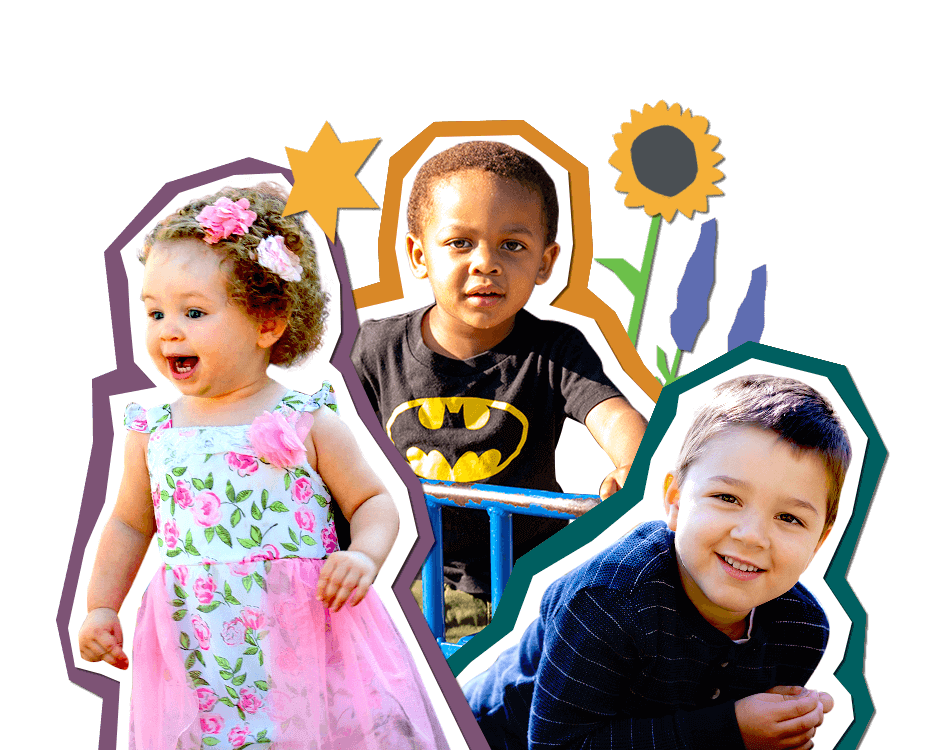
Sensory experiences and fresh air with familiar, attentive teachers.
Movement, materials, and the joy of doing something for themselves.
Longer investigations, collaboration, care, and ideas they can revisit.
A natural playground with its own character. Ask a school to show you its outdoor spaces during a visit.
Come walk the spaces
Visit a Green Garden school, meet the teachers, and explore the outdoor classroom your child would come to know.