“I am safe here.”
Predictable routines, calm voices, clear limits, and adults who stay close help children settle into the day.

Social & emotional learning · The Green Garden way
A child learns what it feels like to be safe, heard, and capable through the people beside them.
That is why social and emotional learning lives in every Green Garden day: in a warm arrival, a hard goodbye, a disagreement over a toy, and the courage to try again.
Behavior tells us something. Our response teaches something.
The foundation beneath the day
We draw from Conscious Discipline to help adults notice what a child needs in the moment. When children feel safe and connected, they have more room to learn the skills that a difficult moment calls for.
Predictable routines, calm voices, clear limits, and adults who stay close help children settle into the day.
Teachers learn each child’s cues and interests. A greeting, a familiar song, or a few undivided moments can tell a child, “I see you.”
With support, children practice naming feelings, communicating needs, making a plan, repairing harm, and trying again.
The adult is the starting point
Children cannot borrow calm from an adult who is escalating with them. So our teachers work to notice their own reactions, steady themselves, and respond with both warmth and a clear boundary.
It is practice, not perfection. The work asks us to keep learning, to repair when we miss the mark, and to model the very skills we hope children will carry forward.

One ordinary moment
Social and emotional learning is part of the real life of a classroom. It happens when a feeling is big and the next choice matters.
Imagine two children reaching for the same shovel. A teacher moves close, keeps everyone safe, and helps each child say what they wanted. Together they work toward a plan. The goal is more than ending the conflict; it is giving children a way to handle the next one.
“You both want to use it. I’m here to help. What could we try?”
What families can see
The work looks different as children grow, but the thread is the same: relationships, agency, and skills built in real moments.
A teacher notices a baby’s signal, responds, and stays present. Before there are words, there is a relationship to rely on.
A toddler hears a steady limit and receives help through frustration. The adult makes space for emotion while keeping the boundary clear.
Children learn to say what happened, hear another perspective, find a solution, and make things right with support.
Teachers and families talk about what helps a child feel connected, what they are practicing, and how to support that growth together.
A place to practice
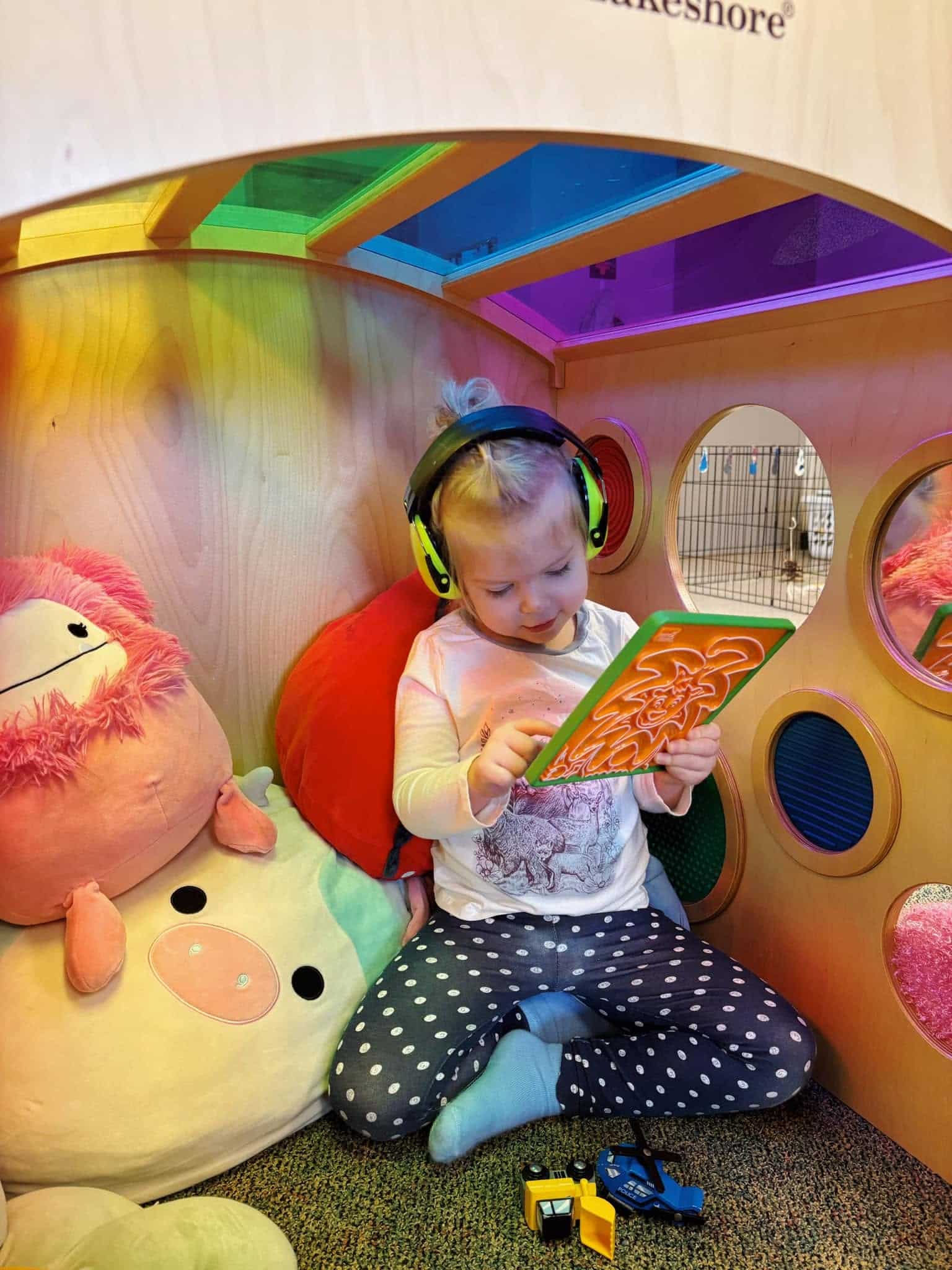
A quieter space, headphones, visual prompts, and familiar objects give children choices as they begin to notice what is happening in their bodies.
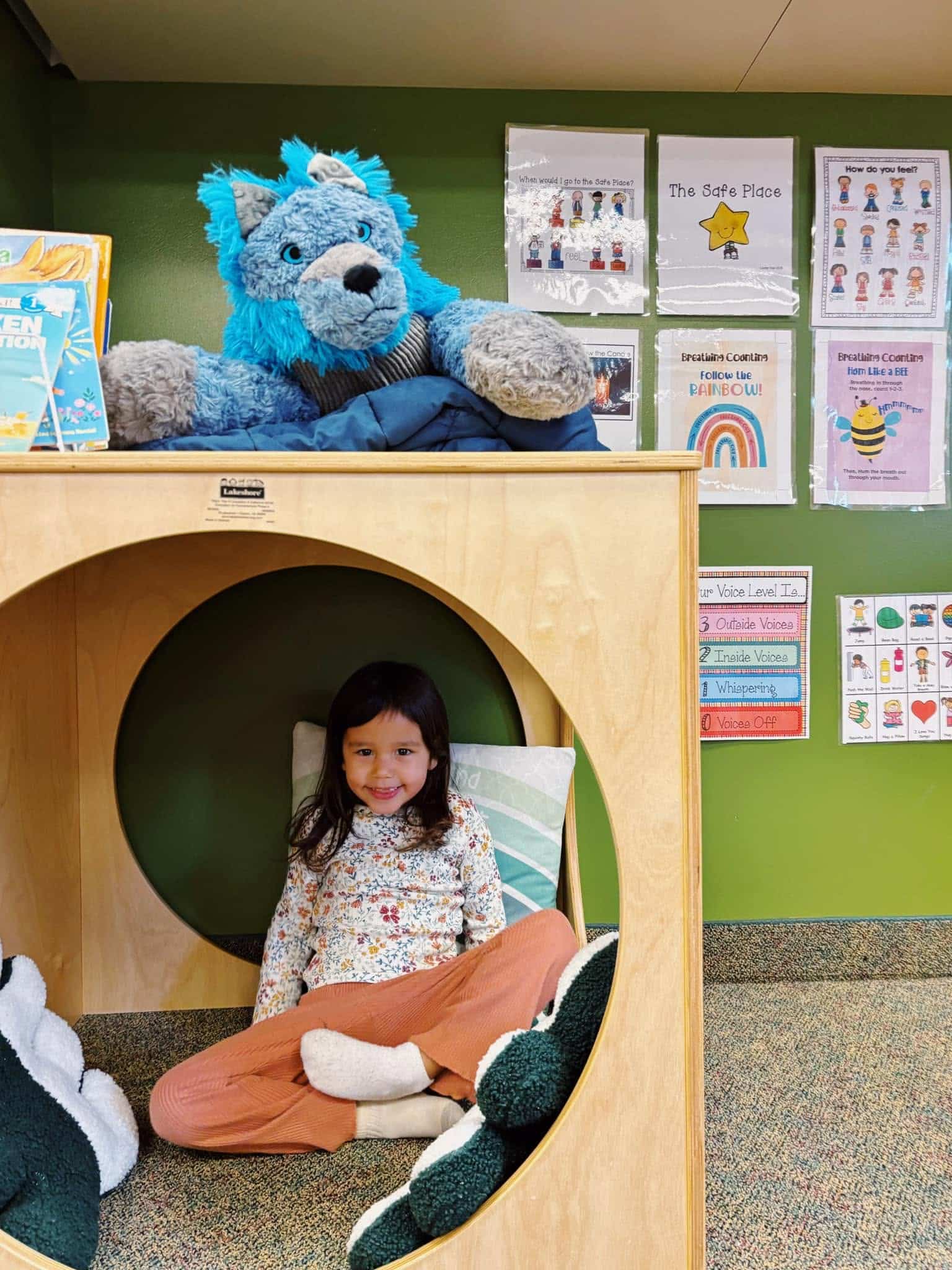
Our Safe Place is a supportive space to practice these skills. An adult stays available to connect, guide, and help a child return to the group when they are ready.
Connection on purpose
We use playful greetings and connection practices, including Conscious Discipline’s I Love You Rituals, to give children moments of focused attention and belonging. A shared song, a gentle game, or a greeting a child chooses says: you are part of this community.
These moments are small enough to fit into a day and meaningful enough to return to again and again.
Connection is something we practice, not something we assume.
Learning through the whole day
Our HighScope approach gives children active roles in their learning. In preschool, they make plans, carry them out, and reflect. Throughout the day, teachers support play, relationships, and conflict resolution as children practice making choices with others.
Why this matters to us
That is how we believe the world changes: through the ways we listen, the limits we hold, the mistakes we repair, and the confidence we help children build in themselves and one another.
Questions families ask
No. Children need clear, consistent limits. We focus on holding those limits calmly and teaching the skills a child needs to succeed within them.
We first keep children safe and care for the child who was hurt. We help the other child settle, set a clear boundary, understand the impact, and practice a safer way to respond. Repair is taught with support, not reduced to a forced apology.
Start with one small practice: pause before responding, name the feeling, hold a clear limit, or make time for a playful connection ritual. Your child’s teachers can share the language and routines they use at school.
Learn more about the approaches we draw from: Conscious Discipline and HighScope.
See it for yourself
Visit a Green Garden school, meet the people, and see how learning through connection lives in the day.